
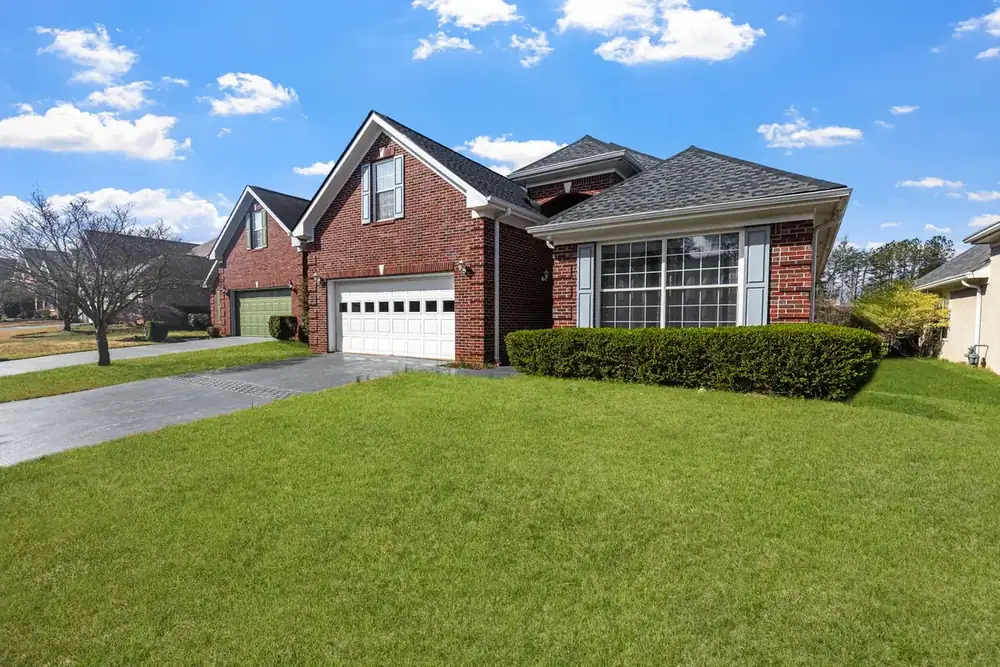
East Sherman is the city's established side. Across US-75 and the Texoma Parkway from the newer growth, the streets fill with smaller, older properties, the postwar ranch homes that housed Sherman's expansion decades, set under mature pecans and oaks, on lots that have been settled for half a century or more. It is stable, lived-in Sherman, and its water damage comes from age working on a specific construction: the slab ranch.
A slab ranch concentrates its plumbing in and under the concrete. Supply lines were cast into the pour or run beneath it; cast-iron drain lines lie in the soil below. Cast iron's working life is measured in decades, and the east side's stock is arriving at the far end of it, drains thinning from the inside, joints opening as the expansive clay shifts the slab season by season. The leaks this creates are almost never sudden. They are slow, buried, and patient, and they bill you through the water meter long before they show on a floor.
There is a generational rhythm to east side calls: the neighborhood's houses were built within a few decades of each other, plumbed with the same materials, and those materials are reaching their limits together. A street that has watched one under-slab drain failure has usually watched several, and the neighbors' experience is worth listening to, when the house two doors down repipes, it is information about your own lines' remaining years, not just gossip.
Homes On The East Side
- Postwar ranch homes on slab foundations, the east side's defining house, with plumbing cast into or under the slab.
- Cast-iron drain systems at or past their design life, running under slabs where inspection is hardest.
- Mature pecan and oak canopy, deep shade, deep roots, and the pressure both put on buried lines.
- Garages and carports converted over the years into living space, sometimes with plumbing extended to match, on slabs that sit lower than the house's.
- Detached garages and workshops of the same vintage, slab floors, utility sinks, and water lines that freeze earlier and leak longer unnoticed than anything in the house.
Water Problems We See In East Sherman
- Under-slab supply leaks, the warm floor spot, the climbing water bill, the faint sound of water at night; water migrating along the slab for weeks before it surfaces.
- Failing cast-iron drains under the slab, chronic slow drains, sewer smells at floor level, and backups that clearing only fixes for a while.
- Water heater failures on slab floors, heaters in closets and garages whose leaks spread across concrete and under walls before anyone sees a drop.
- Freeze splits at hose bibs and exterior walls, the slab home's exposed points, splitting in hard cold and leaking into wall bases at the thaw.
- Storm water at garage and conversion seams, the added-on rooms sit lowest, and spring rain finds their thresholds first.
- AC condensate overflows, attic and closet air handlers whose clogged drains soak ceilings and closet floors through the long cooling season.
East side work centers on burst pipe and slab-leak cleanup paired with structural drying tuned for slab construction, moisture at the slab's edge behaves differently from moisture in a crawlspace, and the drying plan has to know the difference. East side homeowners hold one more piece of leverage: the water meter has usually been reporting an under-slab problem for a month before the floor shows it, so the monthly bill deserves reading as carefully as the house. A bill that creeps for two consecutive months is a work order, not a curiosity.
Questions Specific To East Sherman
What Are The First Signs Of An Under-Slab Leak?
A water bill that climbs without explanation, one warm patch of floor, the sound of water running when the house is quiet, or a section of flooring that starts lifting or feeling soft at the slab's edge. Any one of them justifies a call, slab leaks do not improve with time, and the water is travelling whether it is visible or not.
How Disruptive Is Fixing A Drain Under A Slab?
It depends on where the failure is and the home's layout, options range from localised access through the floor to rerouting a line through walls or the attic so the slab is left alone. The restoration contractor scopes the damage and coordinates with the plumber's chosen route; what is certain is that the drying and restoration are planned around the repair, not against it.
Does Drying Work Differently On A Slab Home?
Yes. There is no crawlspace to dry, but moisture travels along the slab's surface under flooring and wicks into wall bases at the perimeter. The plan uses directed air at wall bases, flooring decisions made from readings (not guesses), and patience at the slab edge where moisture leaves slowest.