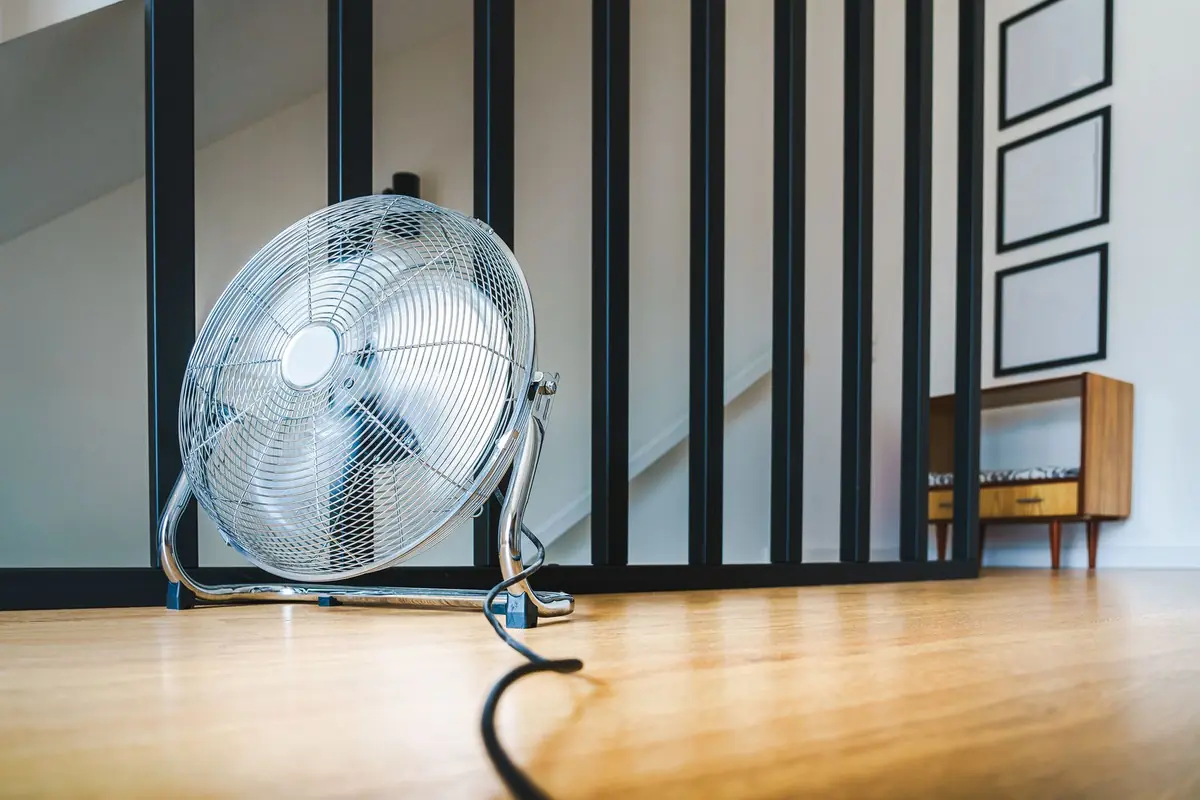
Water Extraction & Removal
Standing water pumped and vacuumed out of floors, carpets, and crawlspaces, the step that limits every bit of damage after it.
About this service →A pipe lets go during a February freeze. A water heater gives up overnight. A spring storm pushes water under the door, and a slab leak soaks a floor in silence. Whatever happened, one call connects you with an independent Sherman contractor who extracts the water, dries the structure, and puts the room back together.
Call Now (903) 555-0146Sherman sits in Grayson County on the Blackland Prairie, and its water damage follows the local pattern. Winters here are not mild enough to ignore: NOAA's climate normals put Sherman's January average lows right around freezing, and most winters bring at least one hard, multi-day freeze. When temperatures stay below freezing, pipes in exterior walls, attics, and crawlspaces split, and the leak often announces itself only when the thaw comes and water starts moving. The February freeze pattern North Texas knows well has filled local contractors' schedules more than once.
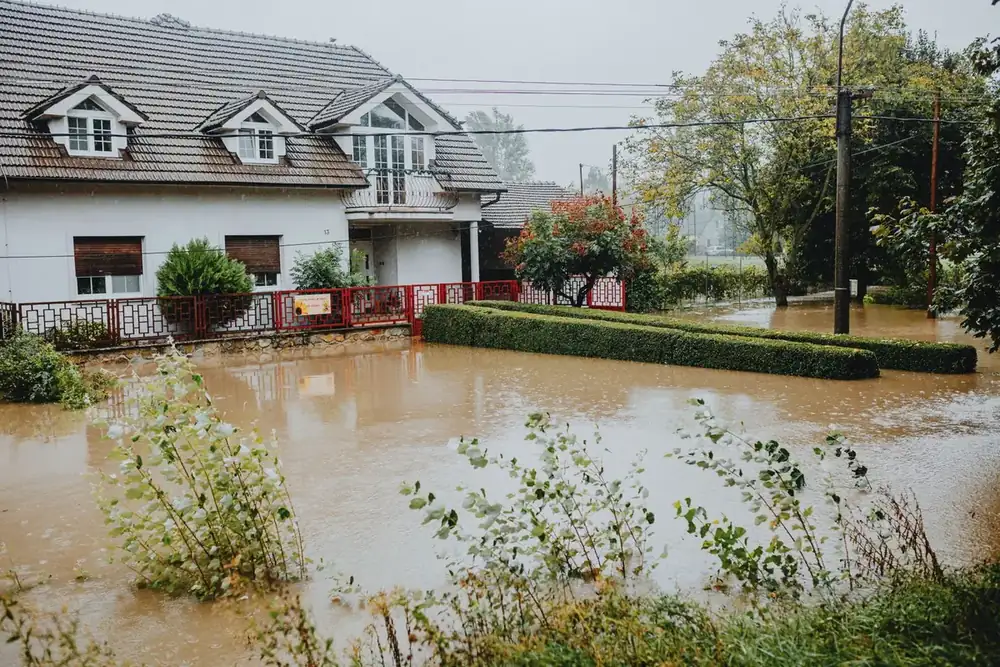
Spring flips the problem. Storm season sends heavy rain across Grayson County in a few hours at a time, and water finds the low door threshold, the window well, the garage seam. Between those two seasons, the everyday causes do steady damage: water heaters that rust through, washing machine hoses that split, supply lines under slabs that leak quietly for weeks, and air-conditioning condensate lines that clog and overflow in the middle of summer.
The housing stock decides how each event plays out. Near downtown and the Austin College area, Sherman's oldest homes stand on pier-and-beam foundations with plumbing that has been in service for generations. Across the rest of the city, postwar and newer homes sit on concrete slabs poured over expansive clay soil, soil that swells when it soaks up water and shrinks as it dries, moving the slab and stressing the pipes cast into it. A leak under a slab behaves differently from a leak in a crawlspace, and the cleanup has to match the house. The contractors in our network work across Sherman's housing, from Heritage Row Victorians to the new subdivisions rising off the Texoma Parkway.
Summer adds its own quiet category. Air conditioners across Sherman drain condensate all season, and a clogged condensate line or a cracked drain pan in an attic unit does not announce itself until the ceiling below stains. Those leaks are slow, but they are relentless, and by the time they are found they have usually been feeding a ceiling cavity for weeks. Add the growth the city is seeing, semiconductor employers expanding, new subdivisions rising west of the parkway, new schools opening, and the pattern keeps renewing itself: every generation of Sherman housing arrives with its own plumbing, and every generation's plumbing eventually meets water where water should not be. Knowing which generation your home belongs to is half of knowing your risk.
Thirteen services cover the ways water gets into Sherman homes and businesses. Each one is handled by the independent contractor we connect you with.
Standing water pumped and vacuumed out of floors, carpets, and crawlspaces, the step that limits every bit of damage after it.
About this service →Sewage and toilet backups cleaned and sanitised safely, contaminated water, porous materials, and the health hazard handled properly.
About this service →Storm and rising-water cleanup for Sherman homes: extraction, mud and debris removal, sanitising, and full structural drying.
About this service →Freeze splits, slab leaks, and sudden line failures, water extracted and dried, wet cavities opened where needed, and the room restored.
About this service →Air movers and dehumidifiers placed to a plan, moisture readings taken daily, and materials dried to a measured standard, not a guess.
About this service →Water heaters, washing machines, dishwashers, and ice-maker lines, small connections that cause outsized floods when they finally fail.
About this service →Stains, sagging drywall, and bubbling paint from upstairs and overhead leaks, sources traced, wet assemblies dried or removed, rooms restored.
About this service →Water damage response for Sherman offices, retail, restaurants, and warehouses, extraction and drying planned around your hours and your customers.
About this service →Pipes split by hard freezes, discovered at the thaw: escaped water extracted, cavities dried to a measured standard, rooms restored.
About this service →Water escaping under the concrete: detection support, extraction of the water that surfaces, and measured drying of floors and walls.
About this service →Water damage from the storm itself: wind-driven rain and roof openings, water extracted, interiors sanitised and dried to standard.
About this service →Water entering through the roof: entry paths traced, attic and ceiling cavities dried, and damaged materials repaired or replaced.
About this service →Urgent water events at any hour: bursts, floods, and backups triaged on a single call, with extraction and drying started fast.
About this service →Restoration work is organized around how contaminated the water is. Water from a burst supply line starts clean; dishwasher discharge does not; sewage is in a category of its own. The category determines what can be dried in place, what has to come out, and how careful the crew has to be, and water left standing moves up a category as it sits.
How contaminated the water is decides how the cleanup is done.
From sanitary sources
Burst supply lines, appliance feed lines, and rainwater that comes through the roof.
Clean at the source, but it does not stay clean for long once it spreads through a building.
Carries chemicals or waste
Dishwasher and washing machine discharge, shower and sink water, toilet overflow.
It can make people sick, and materials it soaks into may have to come out, not dry out.
Grossly contaminated
Sewage backups, rising floodwater, and water that has stood long enough to sour.
Porous materials it touches are removed, and the area is sanitised before drying starts.
Water left standing can move up a category as it sits. The category is recorded on every job.
The work you do in the first hour protects your home and your family, and makes the professional cleanup faster. Work through these in order.
Close the fixture's shutoff valve, or the home's main shutoff if you cannot find the local one. For a leaking appliance, its supply valves sit on the wall behind it. No valve you can reach? The meter box at the street is the last resort.
Never step into standing water that reaches outlets, cords, or appliances. If water is near your breaker panel, leave it alone entirely and say so when you call, electrical safety comes before cleanup, every time.
If the water came from a toilet, a drain backup, or outside flooding, treat it as contaminated. Keep children and pets out of the room, do not mop it around the house, and do not run it through your household vacuum.
Lift furniture onto blocks or foil-wrapped wood, move rugs, boxes, and electronics out of the wet area, and empty low cabinets. Small items moved early are items that dry instead of being thrown out.
Take wide shots and close-ups of the water, the source, and everything it touched before cleanup begins. Those photos are the record your insurer will ask for, and they take two minutes now and are impossible to recreate later.
Resist tearing into walls or ripping up flooring yourself, hidden water needs to be found and measured first, and what gets removed should be a decision, not a guess. Call (903) 555-0146 and describe what happened.
However the water arrived, professional restoration follows the same four stages. The contractor we connect you with handles all of them.
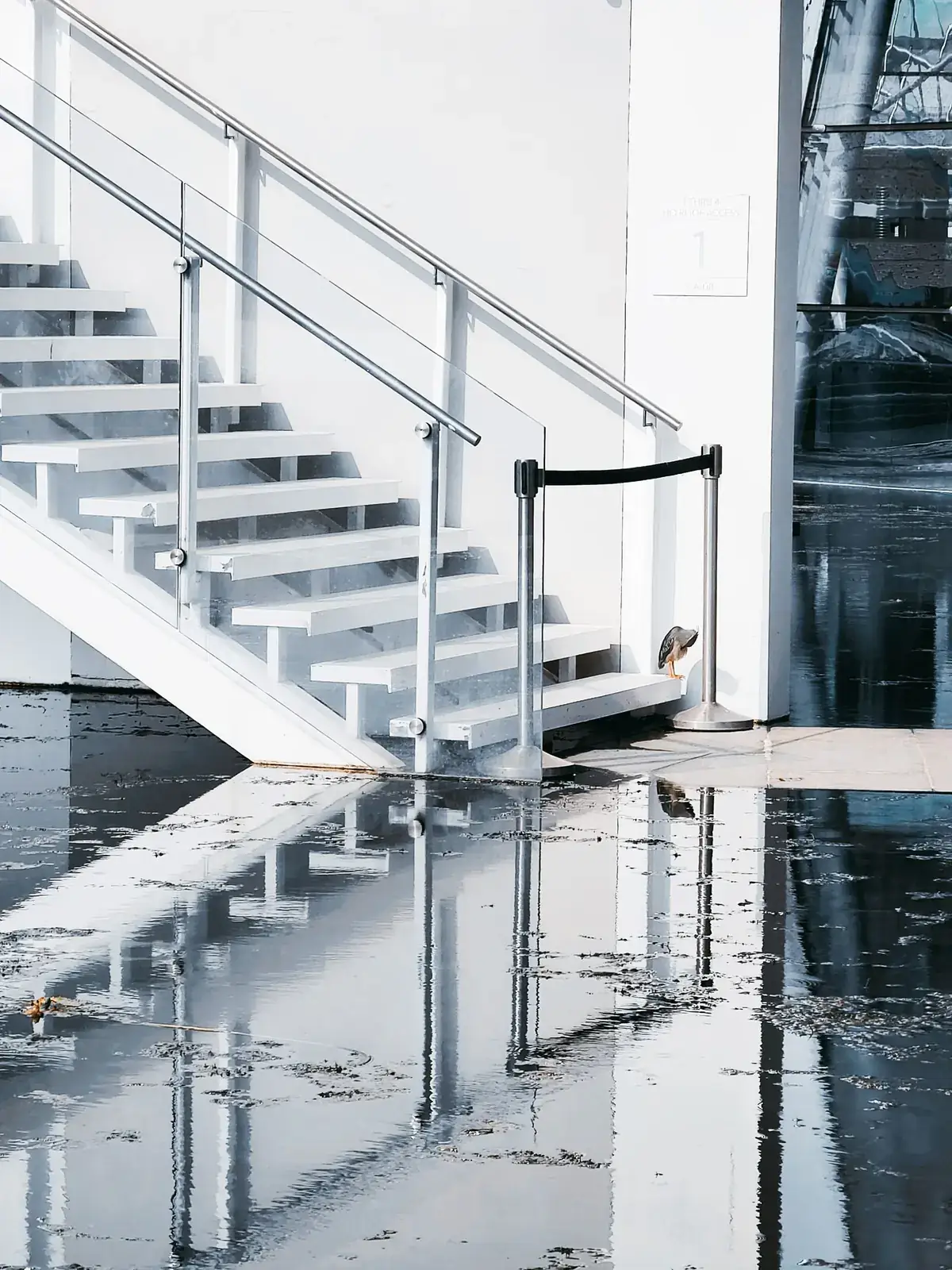
The source is confirmed stopped, the water category identified, and standing water is pumped and vacuumed out with truck-mounted or portable extractors. Moisture meters map how far the water has travelled into walls and floors.
Materials that cannot be dried safely, saturated insulation, swollen particleboard, contaminated carpet pad, come out. Sound materials stay. Every removal is documented for your records.
Air movers drive evaporation from wet surfaces while dehumidifiers pull that moisture out of the air. Readings are taken daily and equipment is adjusted until materials reach their dry standard, not until they merely feel dry.
Affected areas are cleaned and treated, then the room is put back: drywall, flooring, paint, and trim restored so the space is whole again, with the documentation of the job kept together for your insurer.
Most Sherman homes built since the postwar years sit on slab-on-grade foundations, and the slab hides as much as it protects. Supply and drain lines run through or under that concrete, inside a soil profile that changes volume with moisture. Blackland Prairie clay can swell noticeably after a wet spring and shrink back during a dry summer, and that slow seasonal movement bends and stresses rigid pipe. The result is a leak pattern Sherman plumbers and restoration crews know well: a line under the slab begins weeping, the escaping water follows the path of least resistance along the slab's underside, and the first sign inside the house is a warm spot on the tile, a section of flooring that feels soft, or a water bill that jumped for no visible reason.
Older Sherman housing tells a different story. The Victorian-era and early-1900s homes near downtown and the courthouse square stand on pier-and-beam foundations, where a leak drips into a crawlspace and can run quietly until flooring sags or a musty smell works its way up. Galvanized supply lines and cast-iron drains of that era are at or past the age where corrosion does its damage, and freeze risk concentrates in exactly those crawlspaces and exterior walls. Neither housing type is "better" for water damage, they simply fail in different places, which is why the assessment has to start with the house, not with a generic checklist.
Growth adds a third pattern. The subdivisions rising west of the Texoma Parkway are new construction on the same clay: modern PEX supply lines resist freezing better than the copper they replaced, but water heaters installed in attics, common in two-story builds, turn a small tank leak into a ceiling collapse one room below. Wherever your Sherman home sits in that mix, the contractor you are connected with starts from your house's construction, not from a template.
One habit protects every Sherman housing type equally: know where your main shutoff is, and know that it works. Freeze bursts, slab leaks, appliance failures, in every pattern above, the size of the loss was decided less by what failed than by how long the water ran before somebody closed a valve. It is the least expensive insurance in this entire guide, and it costs a Saturday morning with a meter key.
Our network covers all of Sherman's residential ZIP codes, 75090 and 75092. Pick your part of town for the water problems and housing that match it.
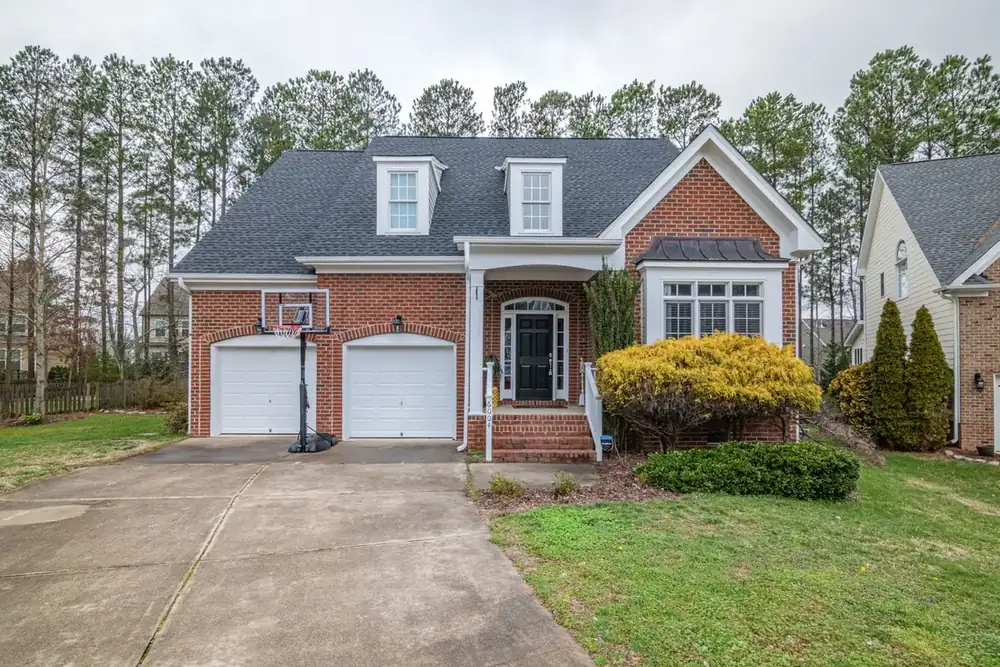
Sherman's oldest streets around the 1936 Grayson County Courthouse, Victorian-era and early-1900s homes on pier-and-beam foundations, and the city's oldest plumbing.
Water damage in downtown Sherman →Tree-lined streets around the 1849 college campus, older established homes and student rentals where leaks can run unnoticed between tenancies.
Water damage in the Austin College area →The established east side beyond the Texoma Parkway: postwar ranch homes on slabs, cast-iron drains at retirement age, and under-slab leaks that hide for weeks.
Water damage in East Sherman →West of downtown across US-75: mid-century to 1990s subdivisions around Sunset Boulevard and Fairview Park, slab foundations, and attic water heaters in two-story homes.
Water damage in West Sherman →Sherman's commercial spine along US-75 and the Texoma Parkway, Midway Mall, Sherman Town Center, restaurants and offices, flanked by the city's fastest-growing subdivisions.
Water damage in the Texoma Parkway corridor →Describe what happened: where the water is, where it came from if you know, and whether the source is stopped. That takes a couple of minutes.
We match you with an independent water damage contractor serving Sherman who handles your kind of problem, extraction, sewage, drying, or full restoration.
The contractor assesses the damage at your property, gives you the estimate, and performs the work.
Stop the water if you safely can, close the fixture valve or the home's main shutoff, and keep people and pets out of any water near outlets, appliances, or a breaker panel. Then call. The contractor you are connected with will extract standing water and start drying; the first hours matter because wet drywall, insulation, and flooring keep absorbing water and the damage spreads well beyond the puddle you can see.
Mold can begin growing on wet materials within 24 to 48 hours, which is why extraction and drying are treated as urgent rather than something to get to next week. Thorough drying, measured with moisture meters, not guessed, is what keeps a water problem from turning into a mold problem on top of it.
We cover Sherman's two residential ZIP codes, 75090 and 75092, from the courthouse square and the Austin College area to the newer subdivisions off the Texoma Parkway. Addresses in neighboring towns carry different ZIP codes and sit outside the area our Sherman contractors serve.
Yes, documenting the damage is a standard part of professional water damage work: photos, moisture readings, and notes on what was affected and what was removed. Whether a loss is covered is always your insurer's decision, but thorough documentation from the start makes the claims conversation far easier than reconstructing events afterwards.
Reading up before you call? Our water damage guides cover first-hour steps, freeze preparation, drying timelines, and mold, written for Sherman homes.
Tell us what happened and we will connect you with an independent Sherman contractor for extraction, drying, and restoration.
(903) 555-0146Phones answered 7 days a week · Serving Sherman ZIPs 75090 & 75092