
Sherman's flood pattern is the North Texas spring pattern: convective storms that drop several inches of rain in a few hours on ground that cannot absorb it fast enough. Water sheets across yards, ponds against foundations, and enters at the weakest points, the garage door seam, a patio door threshold, weep holes overwhelmed by mulch beds built too high, window wells on older homes. Low rooms, sunken living areas, and converted garages take the worst of it, and pier-and-beam homes near downtown can end up with a crawlspace full of water that never shows inside at all.
The cleanup order exists because floodwater is dirty water. Mud and silt carry whatever the water crossed; the moisture left in wall cavities keeps feeding damage for weeks if it is not measured and dried. So the work goes: make it safe, get the water and mud out, remove the materials that cannot be cleaned, wash and sanitise what remains, and dry the structure to a measured standard. Skipping to the last step, fans on a muddy floor, is how flood homes end up with a permanent smell and a mold problem layered on top of the flood problem.
Downtown's pier-and-beam homes add a flood variant of their own: water that never enters a room at all. A crawlspace can take on storm water through vents and low ground and hold it against the floor system for a week, invisible from inside, while the joists and subfloor drink it in. Any Sherman home on a crawlspace deserves a look underneath after a major storm, the flood you find down there is the one that does the slow, expensive damage. Slab homes have the mirror-image problem: water that arrives under the concrete and travels where no eye follows it, which is why slab leak cleanup starts with a meter and listening equipment rather than a mop.
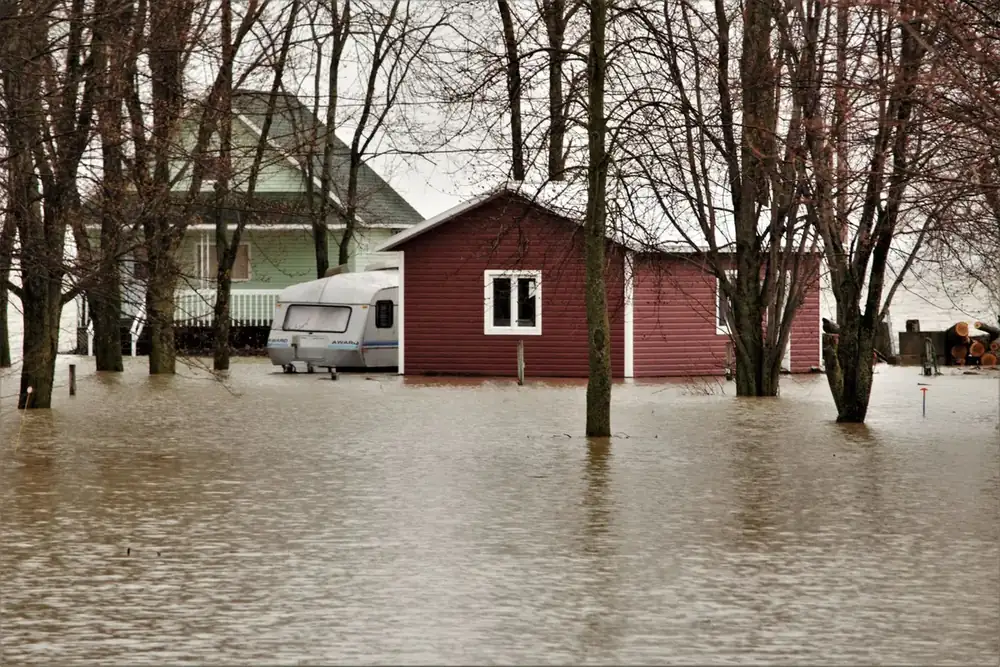
How Flood Cleanup Works
From the day the water recedes, a flood job runs like this:
- Safety comes first, power to affected areas, footing in silted rooms, and any structural concern checked before cleanup begins.
- Water and mud are removed together, pumping and extraction, then shovelling and washing silt out while it is still wet and workable.
- Unsalvageable materials come out, soaked drywall and insulation, swollen flooring, contaminated carpet and pad, damaged contents.
- Hard surfaces are washed down and sanitised, slab, tile, framing, and masonry cleaned of silt and treated before drying begins.
- The structure is dried with monitoring, air movers and dehumidifiers, daily readings, and equipment adjusted until materials reach their dry standard.
- Entry points are identified, the contractor notes where the water came in, so drainage, grading, or threshold fixes can be planned with the restoration.
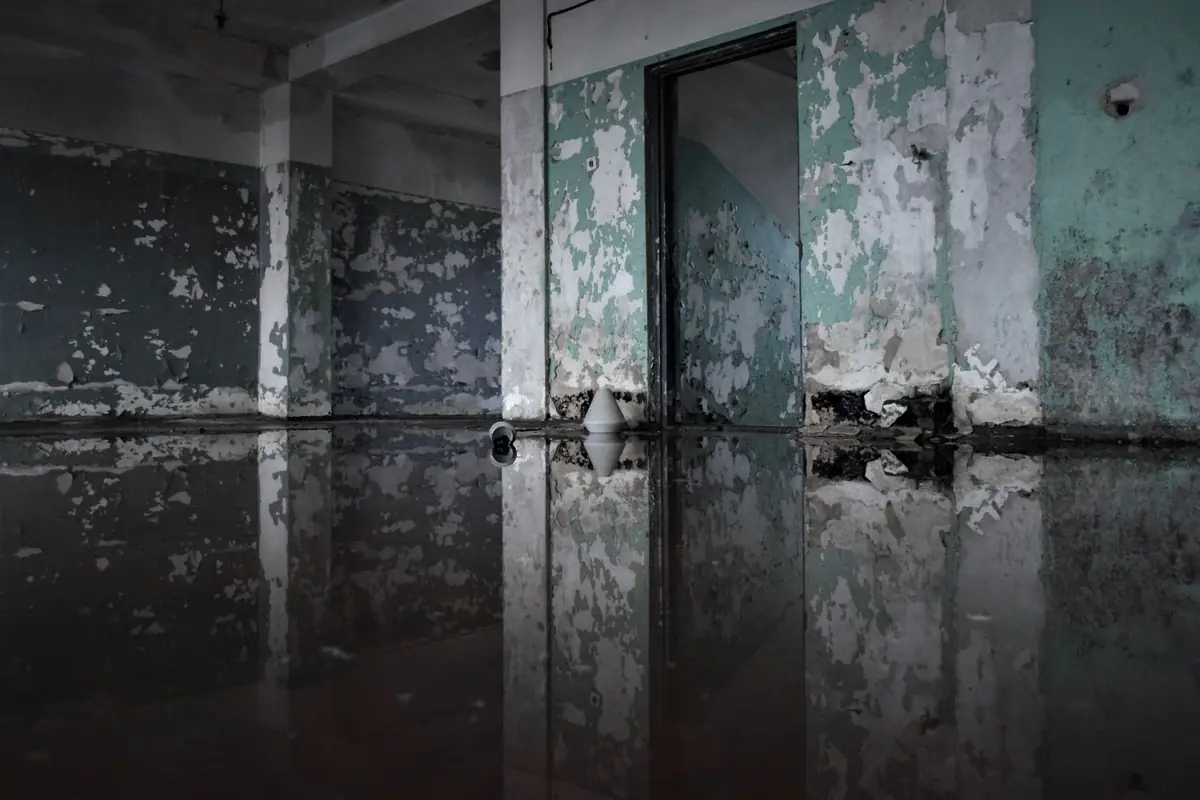
After The Water Goes Down: Hidden Damage Signs
Receded water leaves quieter problems behind. Watch for these in the weeks after a flood:
- A tide line on interior walls higher than the water ever stood outside, water wicked up inside the wall cavity.
- Outlets, switches, or floor-level vents that got wet and now smell of silt or trip breakers.
- Floors that buckle, crown, or go soft days after the surface dried, moisture still in the subfloor or slab edge.
- A musty, earthy smell at baseboard level that cleaning does not shift.
- Silt inside wall cavities and HVAC boots, revealed when a vent cover or outlet plate comes off.
- Doors and cabinets that fitted before the flood and stick now, swollen frames and bases still holding the water they absorbed.
Contents, Documents, And The Next Storm
Flooded contents follow the same contamination logic as the building: porous items the water soaked, upholstered furniture, mattresses, stuffed toys, particleboard pieces, generally cannot be sanitised reliably and are documented and discarded. Hard items, metal, glass, solid wood, most plastics, can be washed and sanitised. Paper is the heartbreaking middle case: documents and photographs can sometimes be saved if they are rinsed of silt and dried or frozen promptly for later conservation, but saturated, mud-caked paper that sits warm for days is usually lost. Sort fast, photograph everything before it goes, and let the contractor's documentation carry the claim.
The other forward-looking product of a flood cleanup is the entry-point record. Water keeps receipts: tide marks, silt trails, and debris lines show exactly where it crossed the envelope, the garage seam, the low patio threshold, the overwhelmed window well. That record, captured during cleanup, is the specification for the drainage, grading, or sealing work that keeps the next Grayson County storm outside. A cleanup that ends without it has restored the room and left the cause armed. One distinction belongs in that record: water that rose from the ground is flood water, while water the storm drove through the roof, vents, and walls is scoped separately as storm damage cleanup, because the two are cleaned, documented, and claimed differently.
Related Guides
From our water damage guides, the homeowner side of this service, in plain language:
After The Storm: Flood Cleanup In The Right Order
When storm water gets into a Sherman home, the order of operations matters as much as the effort. Safety, documentation, mud-out, removal, sanitising, drying, in sequence.
Read the guide →Slab Foundations And Water: Why Sherman Homes Dry The Way They Do
Most Sherman homes sit on concrete slabs poured over Blackland Prairie clay that swells and shrinks with the seasons. What that means for leaks, floods, and drying.
Read the guide →Questions & Answers
The Water Looked Clean, Why Is It Treated As Contaminated?
Because of where it has been. Stormwater crossing streets, yards, fertilised lawns, and overflowing drains picks up bacteria, chemicals, and debris on the way in, whether or not it looks muddy. Treating all outside water as Category 3 is the industry standard precisely because you cannot see contamination.
Does Homeowners Insurance Cover Flood Damage?
Standard homeowners policies generally exclude rising-water flood damage, that is what separate flood insurance exists for, while covering many sudden plumbing events. We cannot advise on your policy; what the contractor does do is document the damage thoroughly from the first visit, which is what any insurer, flood or otherwise, will ask for.
How Soon Should Cleanup Start After A Flood?
As soon as the water has receded and the property is safe to enter. Every day of delay lets moisture travel further into materials and lets mold get its start, mold can begin growing within 24 to 48 hours on wet, silt-fed surfaces. The mud also gets harder to remove as it dries and cakes.
Can My Floors Be Saved After Flooding?
It depends on the material. Tile on concrete often survives cleaning, sanitising, and drying. Solid hardwood sometimes dries back with professional equipment if work starts fast. Laminate, engineered products with swollen cores, and carpet over pad in contaminated water usually cannot be saved, the contractor tests and explains each material rather than guessing.
Will It Flood The Same Way Next Storm?
Quite possibly, unless the entry path changes. Flood cleanup documents where the water entered, a threshold, a garage seam, a low vent, and that information points to the fixes that matter: drainage adjustments, grading, seal and threshold work. The restoration puts the room back; the entry-point notes tell you how to keep the next storm out.
Related Services
Water Extraction & Removal
Standing water pumped and vacuumed out of floors, carpets, and crawlspaces, the step that limits every bit of damage after it.
About this service →Sewage Cleanup
Sewage and toilet backups cleaned and sanitised safely, contaminated water, porous materials, and the health hazard handled properly.
About this service →Structural Drying & Dehumidification
Air movers and dehumidifiers placed to a plan, moisture readings taken daily, and materials dried to a measured standard, not a guess.
About this service →Storm Damage Cleanup
Water damage from the storm itself: wind-driven rain and roof openings, water extracted, interiors sanitised and dried to standard.
About this service →Water Damage Help Across Sherman
Wherever it happens in Sherman, the response is shaped by the building: the flood cleanup needed in East Sherman is not identical to an Texoma Parkway Corridor job. Read more on our service areas overview.