
Nothing on this page replaces the shutoff. If water is running in your home now, the main valve is the whole game for the first five minutes, and if you do not know where yours is, say so on the call and you will be talked to it: most Sherman homes have a meter-side shutoff at the street and many have a house-side valve near where the line enters. Electricity is the second thought: water and live circuits do not share rooms safely, so keep out of standing water that has reached outlets, appliances, or the panel, and treat a flooded room with power in it as a room you describe rather than enter.
What makes an event an emergency is not the clock; it is the trajectory. A burst line adds hundreds of gallons an hour. A sewage backup adds contamination to every hour it sits. Storm water through a roof opening adds a fresh load with every rain band. Compare the stable cases: a discovered stain, a slow drip into a bucket, a damp patch that has been there a week, those are urgent for this week, and the service pages for water extraction, burst pipes, and the rest describe them properly. This page is for the events that are still moving when you find them.
The empty-house case deserves its own sentence, because it produces Sherman's largest losses: the line that splits on day one of a two-week trip and runs until a neighbour notices water at the door. Two habits cap that risk. Close the main shutoff whenever the house will be empty for more than a day or two, and leave a key and this number with someone local who walks through occasionally. Neither habit costs anything; together they convert the worst water event a house can have into a minor one.
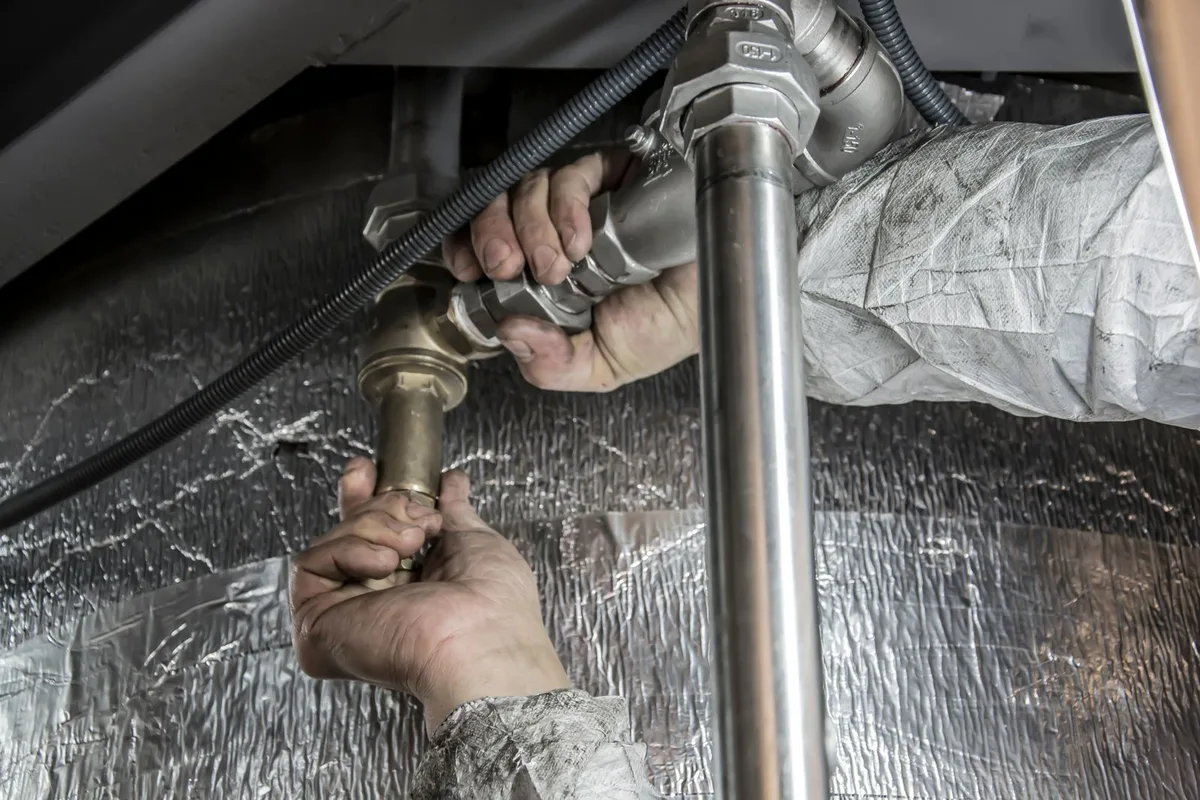
What Happens When You Call About An Emergency
The call and the first visit run on urgency, in this order:
- The water gets stopped first, the shutoff located and closed, with guidance on the phone while you do it, including the meter-side valve if the house valve will not turn.
- Safety is triaged on the call, electrical hazards, sewage, structural sagging, the questions that decide what you should and should not touch while you wait.
- The event is described and matched, source, spread, and materials, so the contractor who is sent is the one equipped for that event, extraction capacity, containment, or sewage protocol.
- Documentation starts immediately, photographs of the water and its source before anything moves, the record any insurance claim will be built on.
- Extraction starts on arrival, standing water out first, contents lifted or moved out of the water's path, and the moisture map drawn while the water's reach is still legible.
- Drying equipment is placed the same visit in the great majority of cases, so the job moves from emergency to managed drying without an overnight pause for the moisture to travel.
- The plan is agreed before the crew leaves, the drying schedule, the return visits for readings, and what restoration will follow, so the household knows the shape of the next several days.
Signs You Are Looking At An Emergency, Not A Repair
If any of these describe your situation, treat it as an emergency and call now:
- Water is actively flowing, spraying, or rising anywhere in the home.
- A ceiling is bulging or sagging under pooled water, or drywall is coming away.
- Standing water has reached electrical outlets, appliances, or the breaker panel.
- Sewage is backing up into fixtures or across a floor.
- The water's source is unknown and the meter is spinning, a hidden line is open somewhere.
- Water is coming through the roof or walls during an ongoing storm.
The First Hour Decides The Size Of The Job
Restoration contractors can reconstruct the first hour of most jobs from the damage pattern: the home where the water stopped in five minutes has a wet room; the home where it ran until morning has a wet floor plan. Everything in this trade scales from that difference: the volume extracted, the materials that cross from dryable to disposable, the days of drying, and the size of the record an insurer has to be persuaded by. The shutoff, the photographs, and the early call are unglamorous, and they are worth more than any equipment that arrives afterwards.
There is also a second clock, and it runs on documentation. Insurers expect prompt mitigation; a loss reported after a weekend of standing water invites questions that a loss photographed at midnight and extracted by morning does not. The contractor's documentation begins at the first visit, but the homeowner's photographs from the first hour, timestamped, showing the source and the spread before anything was moved, are the part nobody can recreate later. Shoot wide, shoot the meter, shoot the source, then start moving furniture.
Questions & Answers
What Should I Do Before Anyone Arrives?
Stop the water if you safely can, then protect what the water has not reached: move dry contents out of wet rooms, lift furniture onto blocks or foil under the legs, and photograph everything as it stands. Do not run a vacuum or portable heater in standing water, and keep people and pets out of any room where sewage or electrical hazards are in play. The first-hour checklist walks the full sequence in order.
Is It Really Answered At Any Hour?
Water emergencies do not keep office hours, and this line is set up for the events this page describes, nights, weekends, and holidays included. When you call, you will be talked through the shutoff and the safety questions first, and matched with an independent local contractor for the response; the contractor confirms the first visit time on that call.
My Emergency Is A Sewage Backup. Is That This Page Or The Sewage Page?
Both, in sequence. This page governs the first hours, stopping water use, keeping people out, getting the event matched and moving. The work itself follows the protocol on our sewage cleanup page: protective equipment, contaminated materials out, sanitising, then drying. Call once, describe it as a backup, and the matching takes the category into account from the start.
Will Fast Action Actually Change The Outcome, Or Is The Damage Done?
It changes it materially. Water spreads by the hour through flooring, wall bases, and cavities, and mold can begin on wet materials within 24 to 48 hours. An event extracted and put under drying within the first day routinely saves flooring, cabinets, and wall assemblies that a two-day delay loses, and the moisture map drawn early is what keeps the drying scope honest and contained.
Does Calling Commit Me To Anything?
No. The referral is free, and the call is a conversation: describe the event, get the shutoff and safety guidance, and hear how the contractor would approach it. The decision to proceed with any work is yours, made with the scope in front of you, and the contractor's charges are agreed with them directly before work begins.
Related Services
Water Extraction & Removal
Standing water pumped and vacuumed out of floors, carpets, and crawlspaces, the step that limits every bit of damage after it.
About this service →Burst Pipe Water Damage
Freeze splits, slab leaks, and sudden line failures, water extracted and dried, wet cavities opened where needed, and the room restored.
About this service →Sewage Cleanup
Sewage and toilet backups cleaned and sanitised safely, contaminated water, porous materials, and the health hazard handled properly.
About this service →Water Damage Help Across Sherman
The same emergency water damage cleanup work is done across Sherman, in East Sherman, where the housing stock shapes the job, and in Texoma Parkway Corridor as well. See all Sherman service areas for the full picture of where our network works.